

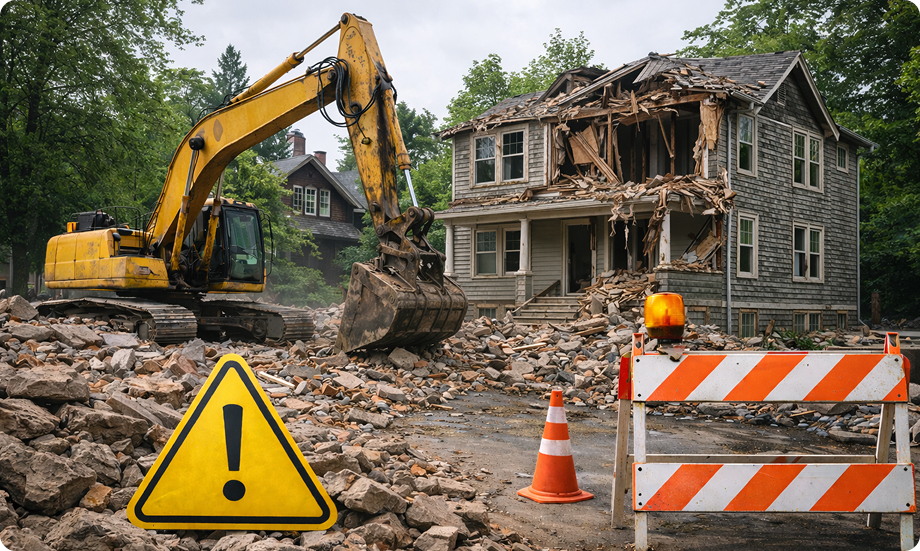
Demolition projects often seem straightforward once a building is cleared for removal, but several factors can pause progress even after initial planning. Property owners and contractors in the Portland area frequently encounter unexpected delays tied to site conditions, hazardous materials, and coordination requirements. Understanding these obstacles is key to keeping your project on track and avoiding costly setbacks.
Hazardous Material Concerns
One of the most common reasons for demolition delays is the discovery or suspicion of hazardous materials such as asbestos or lead. Before any tear-down or major interior removal, regulations require thorough testing for these substances—especially in older homes and commercial properties. If asbestos or lead is found, abatement must be completed by licensed professionals before demolition can proceed. This step is critical for safety and compliance, and it often requires coordination with specialized abatement teams. For more details on testing and abatement, see our Asbestos & Lead Testing / Surveys and Abatement service pages.
Inspection Findings and Permit Requirements
Local regulations in Oregon and Southwest Washington require a series of inspections and permits before demolition work can begin. Unexpected findings during site inspections—such as undocumented structures, hidden utilities, or environmental concerns—can result in additional reviews or remediation steps. Delays may also occur if permit applications are incomplete or if required documentation is missing. Staying proactive with inspections and paperwork helps reduce the risk of project interruptions.
Debris Management and Site Coordination
Efficient debris removal and site management are essential for a smooth demolition process. Delays can occur if there is no clear plan for handling hazardous or non-hazardous debris, especially when materials require special disposal methods. Coordination with abatement teams, waste haulers, and local authorities is often necessary to ensure all materials are handled according to regulations. Having a defined sequence—from evaluation and clearance to final demolition—helps prevent miscommunication and keeps the project moving forward. Learn more about our demolition process and how we coordinate with abatement services on our Demolition Services page.
Delays in demolition projects are often tied to issues that arise just before work is set to begin. Addressing hazardous materials, completing inspections, and planning for debris management are all critical steps that can impact your timeline. Working with experienced professionals who understand the requirements in Portland and the surrounding region helps ensure your project moves forward safely and efficiently. For questions about pre-demolition evaluations or to request service, contact Oregon Abatement today.